
Payment risk
How to protect yourself from losing a China supplier deposit
How to reduce deposit risk by verifying the supplier, completing the order file, approving samples, and linking balance payment to inspection.
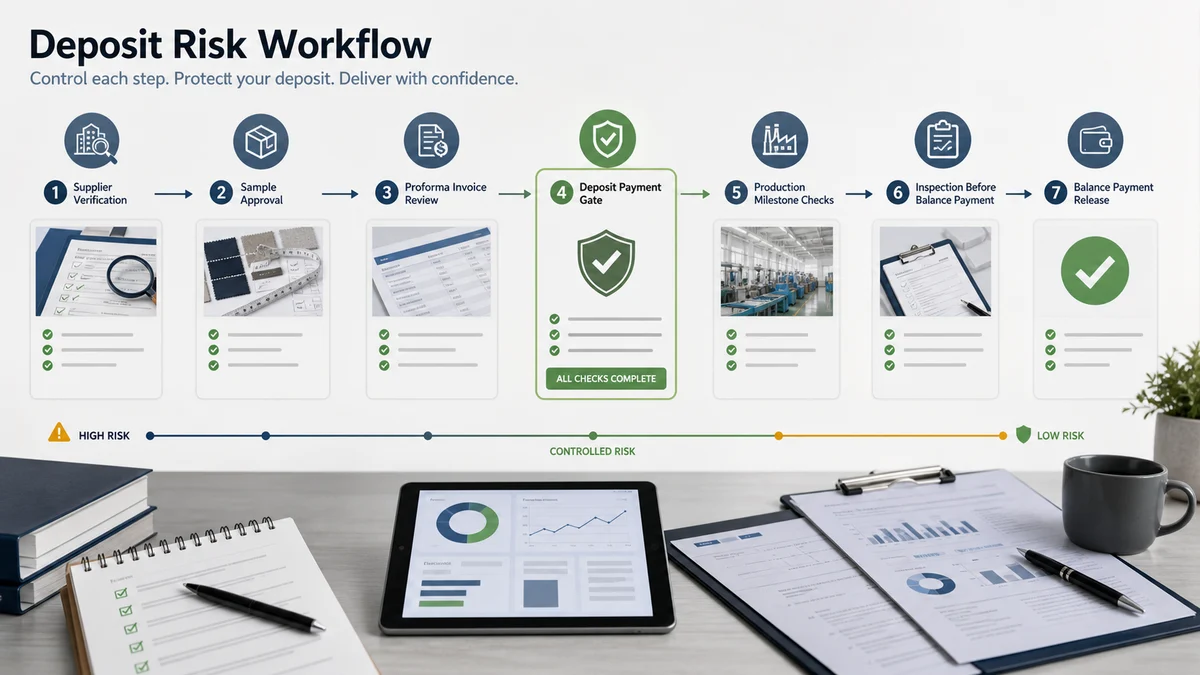
A supplier deposit is not only a payment. It is a transfer of leverage. Once the deposit is sent, the buyer has less control if the supplier is unverified, the specification is unclear, or the sample is not approved.
The safest deposit is one connected to evidence.
Do not pay before the order file is complete
Before deposit, the order file should include the supplier identity, payment beneficiary, final quotation, product specification, sample status, packaging requirements, lead time, Incoterms, inspection plan, and shipment handover responsibilities.
If these details are scattered across chat messages, organize them before paying. A clean proforma invoice is helpful, but it should not be the only control document.
Verify the supplier and beneficiary
Confirm that the company, invoice issuer, and bank beneficiary match or that any affiliate relationship is documented. Last-minute bank changes, personal accounts, unrelated beneficiaries, or pressure to pay quickly should trigger a pause.
Use the supplier verification checklist before payment. Supplier identity checks are basic, but they prevent the worst kind of loss: sending money to the wrong party.
Connect deposit to sample approval
For custom or quality-sensitive products, do not treat a sample photo as approval. Review the physical sample or pre-production sample against the written specification. Record defects, corrections, accepted deviations, packaging notes, and the final approved version.
If a supplier wants a production deposit before the sample is approved, ask what exactly production will follow. If the answer is unclear, the deposit is premature.
Keep the deposit proportional
Some deposit is normal, especially when the supplier must buy material, reserve production capacity, or start tooling. The percentage should match order value, product risk, supplier history, and bargaining position.
A lower deposit helps, but it is not enough by itself. A small deposit sent to an unverified supplier with a vague order can still be lost. A larger deposit tied to strong verification, sample approval, and clear milestones may be more controlled.
Use milestones and balance payment leverage
For larger or custom orders, define milestones before payment. Typical controls include production start confirmation, material readiness, during-production photos, packaging approval, inspection booking, and final inspection before balance.
Balance payment should not be released only because the supplier says goods are ready. It should connect to inspection status, packing list, carton marks, shipping documents, and shipment handover plan.
Deposit risk checklist
- Supplier identity and bank beneficiary are verified.
- Product specification and sample approval are recorded.
- Proforma invoice matches the agreed scope.
- Lead time, payment terms, and Incoterms are written.
- Inspection rights are confirmed before balance payment.
- Packaging and shipment handover requirements are clear.
This checklist should be completed before funds move.
What to do if production stalls after deposit
If the supplier misses milestones, ask for specific evidence: production photos, material status, revised schedule, defect explanation, and recovery plan. Keep communication written and factual.
If the supplier avoids evidence, changes explanations, or refuses inspection, escalate internally before sending more money. Depending on the order value, buyers may need legal, platform, banking, insurance, or local support. This article is operational guidance, not legal advice.