
Payment risk
China supplier payment terms and deposit risk
How to handle China supplier payment terms, deposit timing, balance payment, and risk controls.
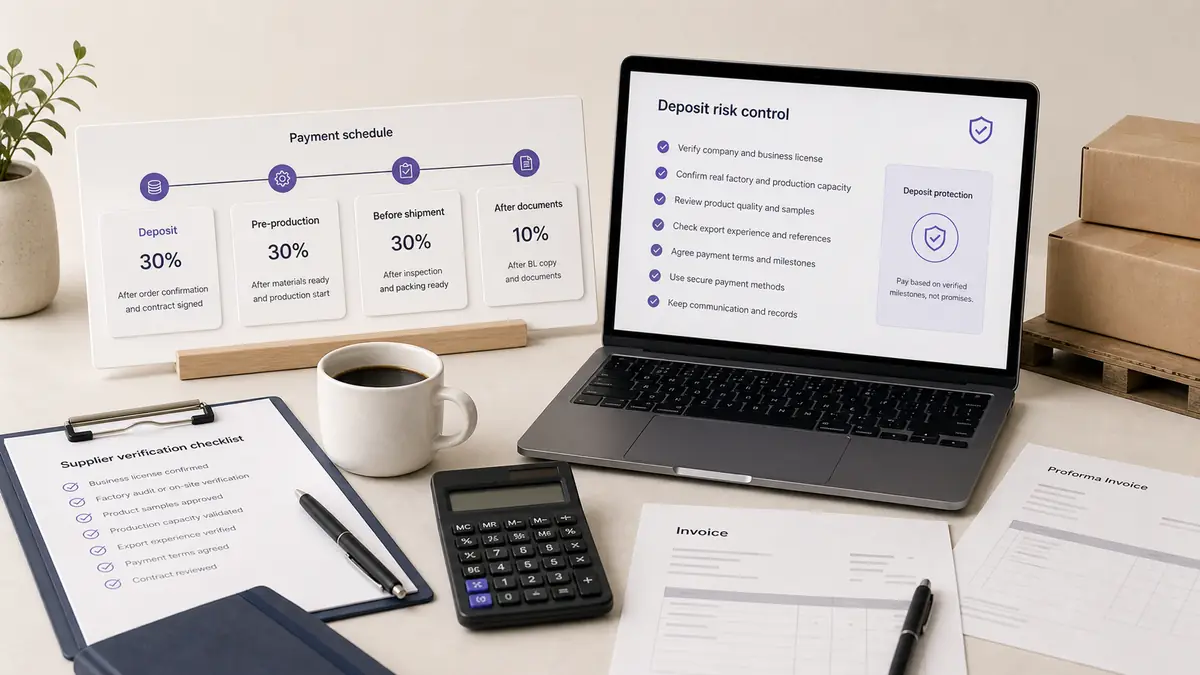
Payment terms shape the risk balance between buyer and supplier. A deposit helps a supplier start production, but it also reduces the buyer’s leverage if verification, samples, or the order file are incomplete.
Common payment structures
Many China suppliers request a deposit before production and balance before shipment. The exact percentage depends on product type, tooling, order value, relationship history, and supplier bargaining power.
Common structures include deposit plus balance before shipment, sample fee before sample dispatch, tooling payment before mold work, or staged payments for larger custom orders. The structure matters less than whether each payment is tied to a clear event. A deposit should connect to an approved order file. A balance payment should connect to inspection status, packing data, and shipment release conditions.
Buyers should avoid treating payment terms as only a percentage negotiation. A lower deposit is helpful, but weak documentation can still create risk. Stronger controls usually come from verified beneficiary details, written specifications, approved samples, and clear release criteria.
What to confirm before deposit
Before paying, confirm supplier identity, payment beneficiary, final quotation, specification, sample status, lead time, packaging requirements, and inspection plan.
Payment risk controls
- Pay only the verified beneficiary.
- Keep the order file complete before deposit.
- Link balance payment to inspection or release criteria.
- Avoid rushed payment when documents are inconsistent.
- Record all payment terms in writing.
Check the payment beneficiary
The beneficiary should match the verified supplier or an explained company relationship. If a supplier asks for payment to an unrelated account, personal account, different company, or last-minute beneficiary, pause and verify. Some legitimate groups use affiliated entities, but the buyer should not guess.
Ask the supplier to confirm bank details on formal documents and keep a record of who provided them. For larger orders, the buyer may need legal, banking, or trade compliance review before sending funds.
Balance payment timing
For many orders, balance payment should happen only after the inspection status, packing list, and shipment handover details are clear. This connects payment control to inspection readiness and shipment documents.
For custom or higher-risk orders, payment terms should also be reflected in the supplier contract so inspection rights and defect remedies are clear before production.
When to slow down payment
Slow down if the supplier changes company names, avoids documents, refuses sample corrections, pushes for balance before inspection, cannot provide packing details, or changes shipment dates without evidence. These are not automatic proof of bad intent, but they are reasons to ask for clarification before money moves.
Payment discipline is not about being difficult. It protects both sides by making the order file clear. A good supplier should understand why the buyer wants payment terms, product scope, inspection status, and handover details documented.
Practical limitation
Payment guidance on this site is operational, not legal or financial advice. Buyers should use their own finance controls, bank verification, contracts, and compliance review where appropriate. The sourcing role is to make supplier-side facts and missing evidence visible before payment decisions.
Related procurement guides
- China supplier search process
- Factory audit vs factory verification
- How to compare China supplier quotes
- How to make a contract with a Chinese supplier
- Trading company vs factory in China
- Sample approval process
- Production follow-up checklist
- Packaging requirements
- Inspection readiness
- Shipment handover documents