
Shipment coordination
Shipment handover documents from China suppliers
Shipment handover documents buyers should collect from China suppliers before cargo leaves the factory.
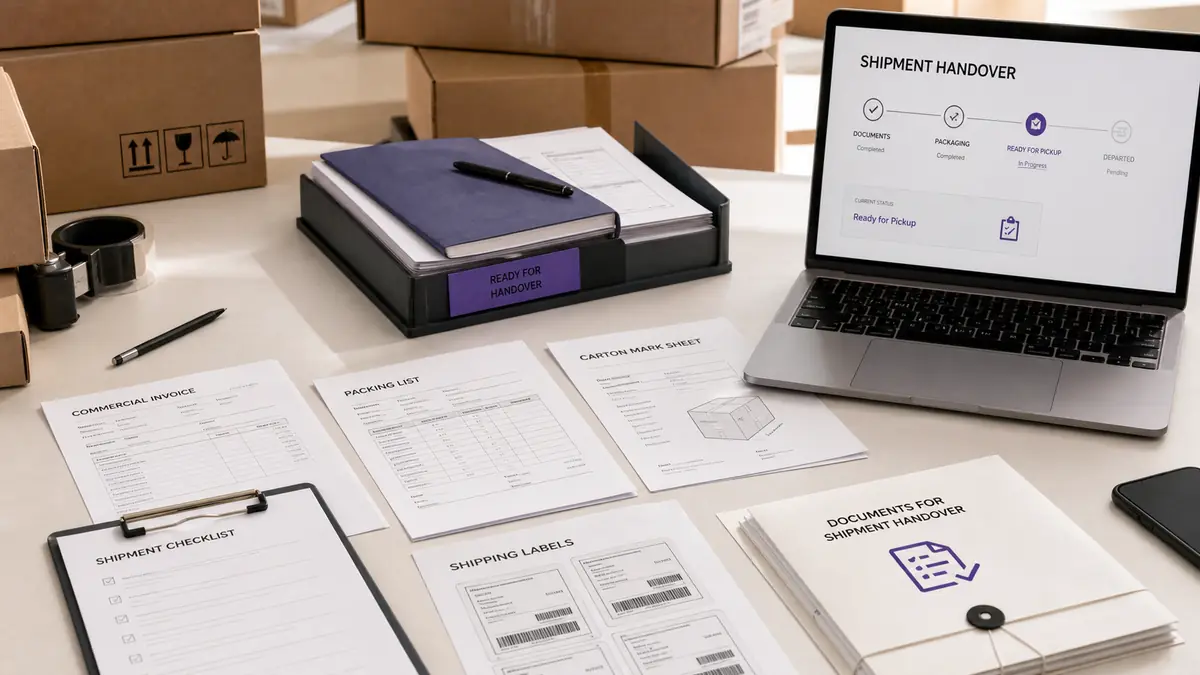
Shipment handover is where production work becomes logistics work. If documents are incomplete, the buyer, freight forwarder, and supplier waste time solving preventable problems.
Confirm the handover scope
Before the goods leave the factory, confirm who owns booking, pickup, export declaration, cargo photos, customs documents, and final shipping instructions.
Handover scope depends on the trade term and the buyer’s logistics setup. Under some terms, the supplier only prepares goods for pickup. Under others, the supplier coordinates export steps or delivery to a port or warehouse. The buyer should not assume the supplier and forwarder understand each other without written instructions.
The handover note should name contacts, pickup address, target date, loading requirements, document deadline, and any condition that must be satisfied before release.
Core shipment documents
Most B2B orders should have a commercial invoice, packing list, carton marks, gross and net weight, carton dimensions, product description, HS code guidance, and supplier contact for logistics coordination.
Documents to collect
- Final commercial invoice.
- Packing list with carton count and dimensions.
- Carton mark file and photos.
- Inspection report or release confirmation.
- Export license or declaration support when needed.
- Booking or pickup confirmation.
Check document consistency
Shipment documents should tell the same story. Product description, quantity, carton count, weights, dimensions, buyer details, supplier details, and shipment terms should match across invoice, packing list, labels, and forwarder instructions. Inconsistencies can delay pickup, customs work, warehouse receiving, or payment release.
Ask for document drafts before goods move. It is easier to correct a packing list before pickup than after the cargo is already with the forwarder.
Tie handover to inspection
Shipment should not move before inspection status is clear. If inspection is waived, that decision should be written. If inspection is required, link the handover to inspection readiness before shipment.
What to confirm with the forwarder
The forwarder may need carton data, cargo ready date, pickup location, supplier contact, loading photos, warehouse address, shipping marks, invoice, packing list, and any special handling instructions. If the supplier sends incomplete data, the forwarder may make assumptions that create delays or extra charges.
For consolidated shipments, confirm whether cartons must be marked by SKU, PO, destination, or warehouse routing. For marketplace or retail shipments, label rules may be stricter than the supplier expects.
For US imports, align the handover package with the import document checklist and customs clearance plan.
Keep a final handover record
Before the cargo leaves the supplier, keep a final record of release status, document versions, packed quantity, carton photos, forwarder instructions, pickup confirmation, and any open exceptions. This record helps if the buyer later needs to resolve a warehouse discrepancy, insurance question, supplier dispute, or missing-document issue.
Review note
This guide covers supplier-side handover control. It does not replace freight forwarding, customs brokerage, import compliance, insurance, or destination delivery management.
Related procurement guides
- China supplier search process
- Factory audit vs factory verification
- How to compare China supplier quotes
- Trading company vs factory in China
- China supplier payment terms
- Sample approval process
- Production follow-up checklist
- Packaging requirements
- Inspection readiness
- Documents needed to import from China to the USA
- How to organize logistics from China to the USA