
Quotation
How to compare China supplier quotes
How to compare China supplier quotes by price, scope, payment terms, packaging, lead time, and risk.
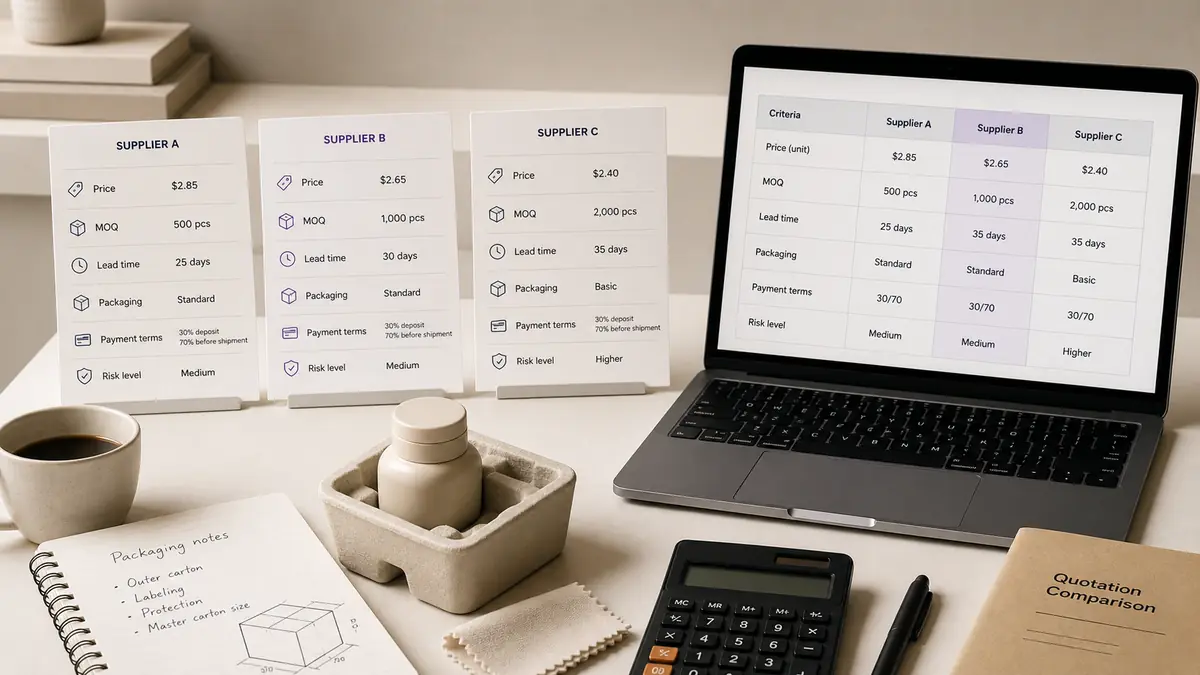
The cheapest China supplier quote is not always the best offer. A quote becomes useful only when the buyer knows what is included, what is excluded, and what risk sits behind the price.
Normalize the specification first
Do not compare quotes that describe different products. Confirm material, dimensions, finish, packaging, certification, accessories, testing, and delivery terms before reading the unit price.
If suppliers quote against different assumptions, ask them to re-quote from the same brief.
A normalized quote request should include what is fixed and what is optional. If material can change, ask suppliers to price each material separately. If packaging is not final, separate product price from packaging price. If tooling or artwork is needed, ask whether it is included, refundable, or charged once. This prevents hidden differences from looking like price savings.
Compare the full cost
Unit price is only one part of supplier comparison. Review MOQ, sample cost, tooling, packaging setup, inspection cost, inland freight, export fees, payment schedule, and lead time.
Quote fields to compare
- Unit price and currency.
- MOQ and price breaks.
- Tooling or mold cost.
- Packaging and labeling scope.
- Lead time after deposit and sample approval.
- Incoterms and shipment handover point.
Also compare the cost of supplier behavior. A low quote from a supplier that answers slowly, avoids written details, or changes assumptions may cost more once samples, rework, delays, and document corrections are included. For B2B orders, the quote should be evaluated with the operational risk attached to it.
Use risk as a comparison column
A supplier with a slightly higher price may be better if communication is clear, documents are consistent, samples are stronger, and production timing is realistic.
Quote comparison should connect directly to supplier verification and the sample approval process.
If the goal is to judge whether a supplier price is truly competitive, compare the quote after specifications, MOQ, Incoterms, packaging, tooling, and supplier risk are normalized.
For US imports, quote comparison should continue into landed cost calculation before the supplier is selected.
Questions to ask before choosing
Ask each supplier what can change the price after deposit. Common answers include material cost, packaging files, artwork revisions, tooling changes, quantity changes, certification requirements, inspection findings, and shipment terms. If a supplier says nothing can change, confirm that the quote includes the full written scope.
The buyer should also ask what happens if the approved sample differs from mass production, whether the supplier accepts inspection before balance payment, and whether the payment beneficiary matches the verified company. Price comparison is stronger when it includes these control questions.
Decision method
Create a simple scoring table, but do not let a score hide judgment. Weight the fields that matter for the product: specification match, production fit, price, MOQ, lead time, sample quality, communication, payment risk, packaging readiness, and verification status. Then write a short decision note explaining why the preferred supplier is acceptable and what still needs to be checked.
That note is useful later if production goes wrong. It shows which assumptions were known, which risks were accepted, and which evidence supported the supplier choice.
Related procurement guides
- China supplier search process
- How to know if a supplier price is competitive
- How to calculate landed cost from China to the USA
- How to choose Incoterms
- Factory audit vs factory verification
- Trading company vs factory in China
- China supplier payment terms
- Sample approval process
- Production follow-up checklist
- Packaging requirements
- Inspection readiness
- Shipment handover documents