
Logistics
How to choose Incoterms: EXW, FOB, CIF, or DDP
How buyers can compare EXW, FOB, CIF, and DDP when sourcing from China, including cost visibility, control, risk transfer, customs responsibility, and common traps.
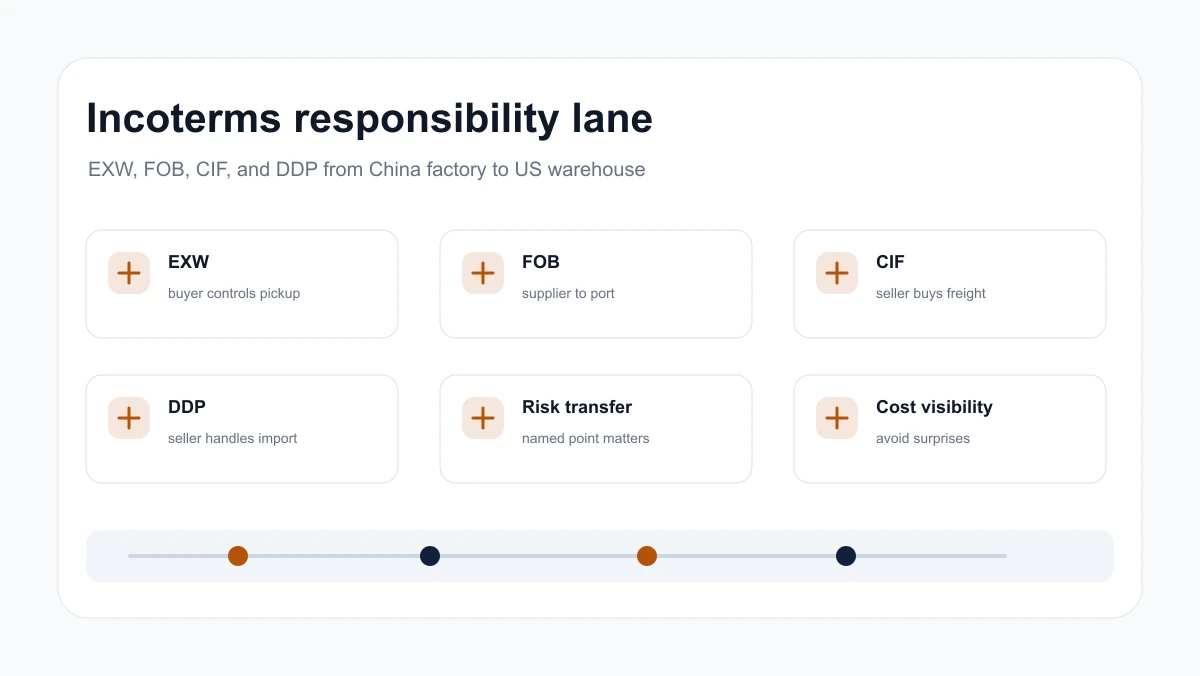
Incoterms define responsibilities between buyer and seller. They do not replace a logistics plan, customs review, insurance decision, or payment control process. The named place and operational details still matter.
Use the current ICC Incoterms rules and confirm terms with your freight forwarder, broker, and legal/commercial adviser where needed.
EXW: buyer controls almost everything
EXW can give the buyer control, but it can also create export and pickup complications. The buyer or forwarder must handle pickup from the factory, local transport, export coordination, international freight, import clearance, and delivery.
EXW can work for experienced buyers with a strong forwarder. New importers may underestimate the coordination work.
FOB: common for ocean shipments
FOB usually means the supplier handles export-side work to the named port, while the buyer controls international freight, insurance decision, US customs, and final delivery. It is often a practical balance for China-to-USA ocean freight.
FOB still requires clear handover: named port, cargo ready date, document deadline, loading responsibility, and forwarder instructions.
CIF: seller buys freight, buyer still imports
CIF can look convenient because the supplier arranges freight to the destination port. The buyer still handles import clearance, destination charges, and delivery after arrival.
The trap is cost visibility. The freight may be bundled into the supplier offer, while destination charges and timing remain unclear. Ask your forwarder to compare the total landed cost before choosing CIF.
DDP: convenient but needs caution
DDP means the seller takes broad responsibility through delivery, including import-side obligations. It can be attractive for small or simple shipments, but it can hide customs compliance, valuation, importer responsibility, and documentation issues.
For US imports, be careful about who is importer of record, how duties are paid, whether documents are accurate, and whether the supplier or logistics provider is using a compliant structure.
Practical decision rule
New importers often choose FOB with a reliable forwarder and broker because it gives better visibility than supplier-controlled freight while avoiding some EXW complexity. Experienced buyers may use EXW when they want full control. CIF and DDP can be useful, but only when total cost and compliance responsibility are clear.