
Logistics
How to organize logistics and shipping from China to the USA
How US buyers can plan China-to-USA shipping, including ocean vs air, LCL vs FCL, forwarder coordination, pickup, export handling, customs, delivery, insurance, and communication.
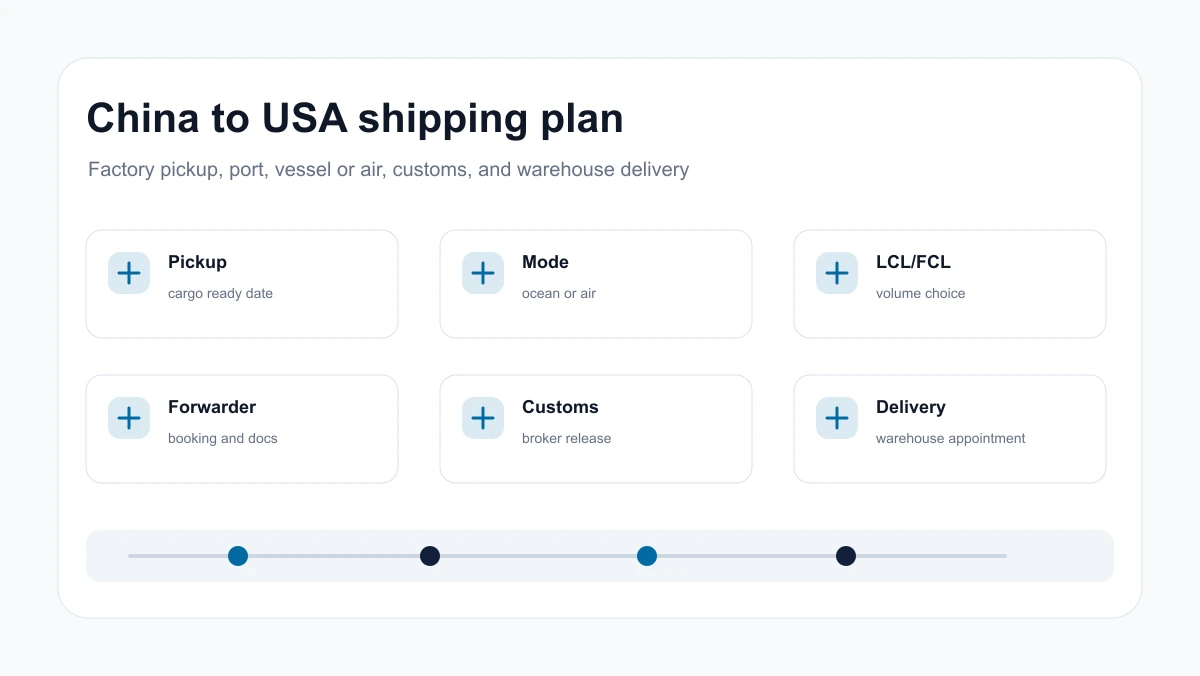
Logistics from China to the USA should be planned before production is finished. If shipping is treated as an afterthought, buyers can face missed sailings, document corrections, storage fees, customs delays, and warehouse receiving problems.
Choose the shipping mode
Ocean freight is usually better for larger, heavier, or less urgent shipments. Air freight is faster but more expensive and more sensitive to dimensional weight. Express courier can work for samples or small parcels, but it is not a replacement for import planning on commercial inventory.
For ocean freight, decide between LCL and FCL. LCL can work for smaller shipments but may involve more handling and consolidation timing. FCL gives more control over a full container when volume justifies it.
Use a freight forwarder and customs broker early
A freight forwarder coordinates pickup, export-side handling, booking, international freight, arrival, and delivery. A customs broker handles US entry review and filing. Sometimes one company offers both, but the responsibilities are still different.
Send the forwarder and broker the draft invoice, packing list, cargo dimensions, weight, Incoterm, pickup address, supplier contact, product description, and target delivery address before cargo is ready.
Build a shipment timeline
Track cargo ready date, inspection date, booking cutoff, pickup date, port delivery, sailing or flight, arrival, customs clearance, final delivery, and warehouse appointment.
Logistics checklist
- Confirm Incoterm and named place.
- Confirm cargo ready date after inspection status.
- Collect invoice, packing list, carton data, and photos.
- Decide ocean, air, LCL, FCL, or courier.
- Confirm insurance needs.
- Share broker requirements before pickup.
- Schedule warehouse appointment or final delivery.
Tie logistics to production release
Shipment should not move before inspection, payment release, packing, and documents are aligned. If goods are shipped with unresolved quality issues or incomplete documents, the buyer may lose leverage.
Connect logistics to inspection readiness and shipment handover documents.
Keep communication structured
Use one shipment record with supplier, forwarder, broker, buyer, cargo details, document versions, pickup status, vessel or flight details, customs status, delivery status, and open issues. This prevents supplier chats, forwarder emails, and broker requests from becoming disconnected.