
US import compliance
How to clear US customs without delays or penalties
How importers can reduce US customs delays by preparing accurate documents, HS codes, valuation, origin, broker coordination, labeling, and compliance review before shipment.
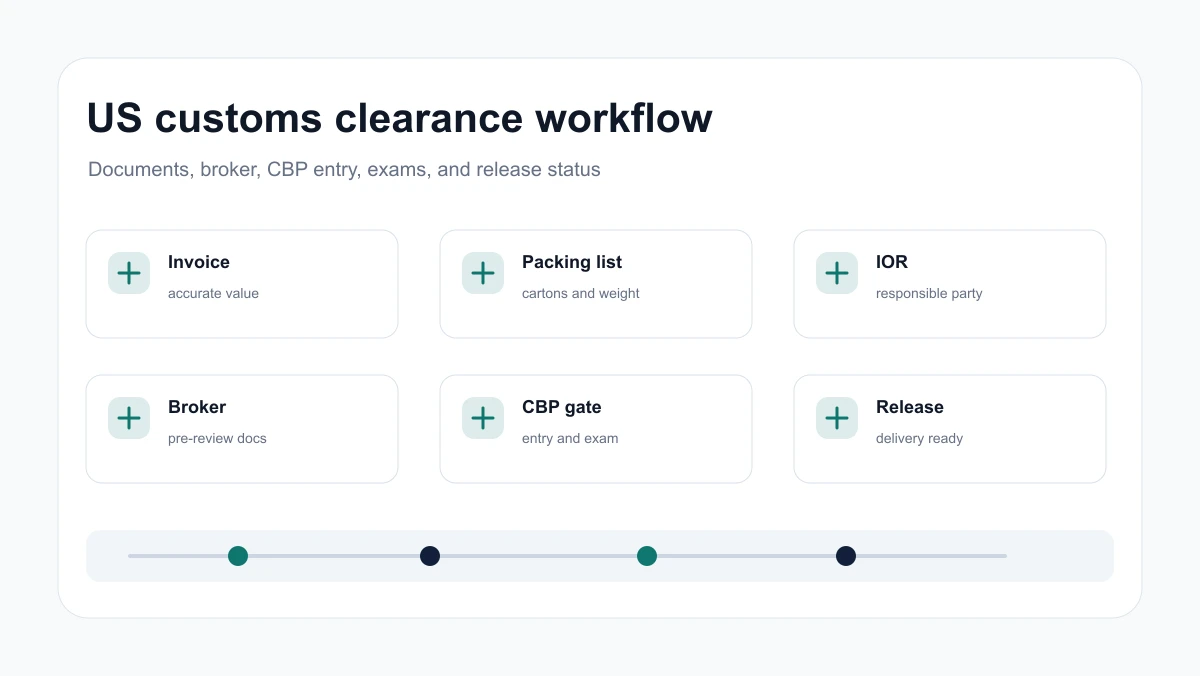
US customs clearance is easier when the import file is prepared before cargo leaves China. Delays often come from inconsistent documents, weak product descriptions, wrong valuation, unclear origin, missing compliance evidence, or late broker coordination.
This article is not customs advice. Use a licensed customs broker for entry filing, classification, valuation, product-specific requirements, and CBP communication.
Assign responsibility early
Confirm the importer of record, customs broker, freight forwarder, supplier contact, and document owner before shipment. The supplier should know who receives invoice drafts, packing details, carton data, booking notes, and compliance documents.
If these roles are unclear, the cargo may arrive before the entry file is ready.
Review documents before shipment
Ask for draft documents before pickup or export handover. The commercial invoice, packing list, bill of lading or air waybill, buyer details, supplier details, Incoterm, quantities, values, weights, carton counts, and product descriptions should match.
Use a pre-shipment document review to catch errors while the supplier can still correct them. This connects directly to shipment handover documents.
Watch the common clearance problems
Customs delay triggers
- Vague product descriptions such as “parts” or “samples”.
- HS code does not match product details.
- Invoice value does not match payment or PO records.
- Country of origin is missing or unsupported.
- Required labels, certificates, or test reports are missing.
- Carton counts and weights differ between documents.
- Broker receives documents after cargo arrival.
Some holds or exams are outside the buyer’s control. But a clean import file reduces preventable corrections and helps the broker respond faster.
Prepare for product-specific requirements
Certain goods may involve FDA, EPA, FCC, CPSC, USDA, or other agency requirements. Others may require safety testing, labeling, certificates, licenses, or admissibility review.
Do not treat customs clearance as only a freight task. Product compliance should be checked before deposit, especially for electronics, children’s products, food contact items, chemicals, medical products, batteries, textiles, and regulated goods.
Keep a post-clearance record
Save entry documents, commercial invoice, packing list, transport document, customs bond records, broker messages, duty payment records, and release evidence. These files help with audits, reorder planning, supplier disputes, and landed cost review.