
US import compliance
How US tariffs and trade restrictions affect importing from China
How US buyers should review tariff exposure, HS codes, Section 301, AD/CVD, UFLPA, origin claims, and compliance risk before importing from China.
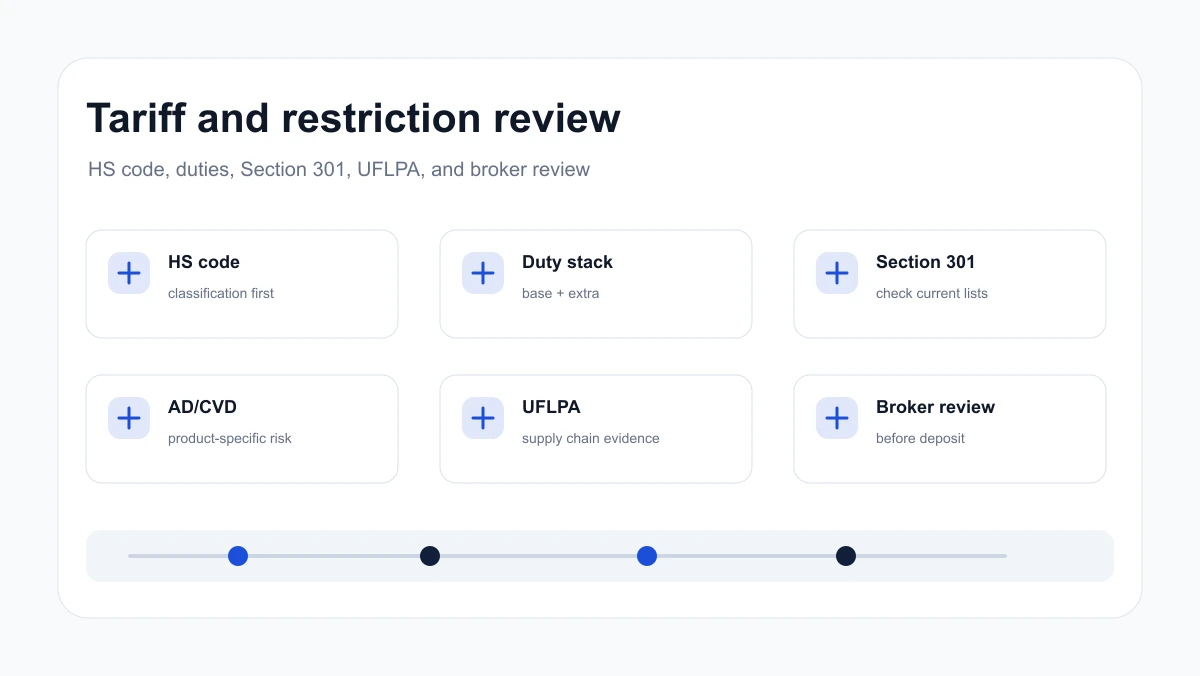
US tariff exposure depends on the product, HS classification, country of origin, customs value, and current trade measures. A supplier quote from China is not complete until the buyer understands the import cost and compliance risk.
This article is operational guidance, not legal or customs advice. Tariff rules and restrictions can change. Work with a licensed customs broker or trade compliance adviser before placing material orders.
Start with HS classification
Most US duty analysis starts with the HTS classification. Similar products can have different duty rates if material, function, use, or construction differs. Do not accept a supplier’s HS code without review.
Ask the supplier for their suggested HS code, product description, material composition, photos, drawings, and technical data. Then have the code checked against US import requirements. A wrong code can create underpaid duties, delays, penalties, or retroactive corrections.
Review the full duty stack
The landed cost may include more than the base duty rate. China-origin goods can be affected by additional measures depending on product and classification.
Common review items
- Standard duty based on HTS classification.
- Section 301 tariffs where applicable.
- Anti-dumping or countervailing duty risk for certain products.
- Merchandise processing and other entry fees.
- Product-specific requirements or agency controls.
For current Section 301 information, review USTR tariff actions and CBP trade remedy guidance with your broker.
Do not ignore forced labor and origin risk
Some imports can be affected by forced labor enforcement and UFLPA risk. This can involve supply chain evidence, origin tracing, supplier documentation, and whether inputs come from high-risk regions or entities.
Review CBP UFLPA guidance before importing products with material or supply chain risk. Supplier claims about origin should be supported by documents, not only email statements.
Check restrictions before deposit
Trade restrictions, sanctions, export controls, product safety rules, labeling, and agency requirements can affect whether a product can be imported, sold, or distributed. The earlier these issues are reviewed, the less likely the buyer is to pay for goods that cannot clear smoothly.
Connect tariff review to landed cost calculation and customs clearance planning before supplier selection.