
Contracts
How to make a contract with a Chinese supplier
What a China supplier contract should include before production, including specifications, payment, delivery, inspection, defects, confidentiality, and tooling ownership.
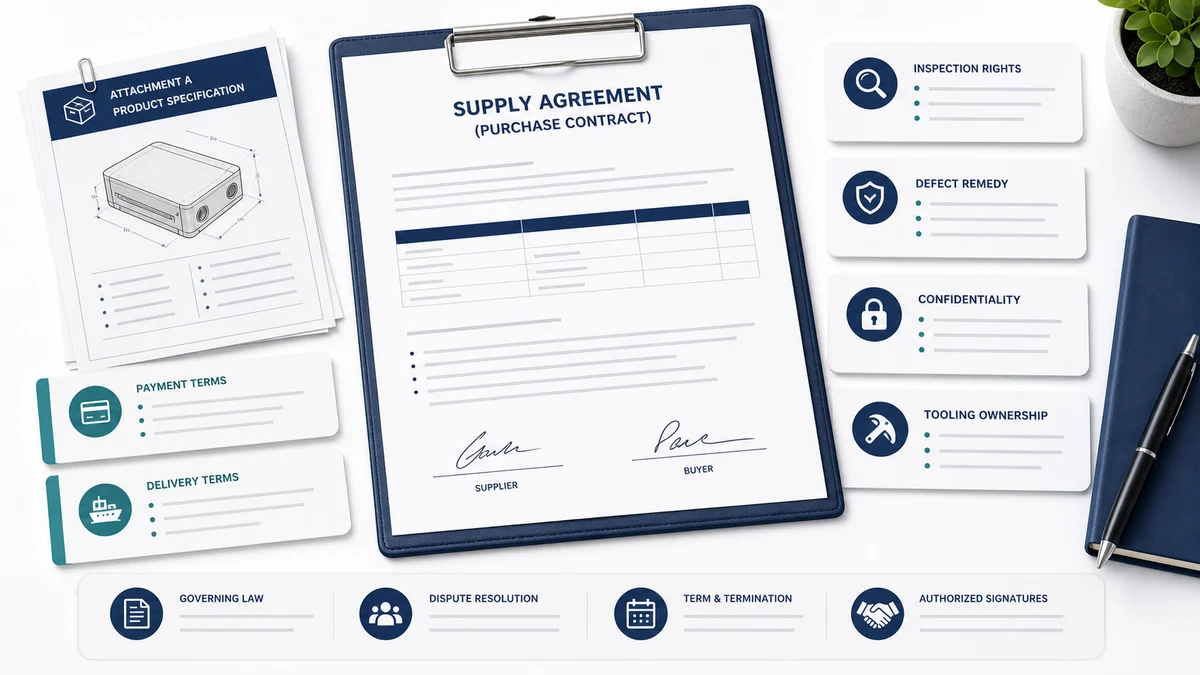
A contract with a Chinese supplier should turn the commercial deal into a usable production control document. It should not sit separately from the purchase order, product specification, sample approval, inspection plan, payment schedule, and shipment terms.
This article is operational guidance, not legal advice. For material orders, custom products, regulated goods, or disputes, use qualified legal review.
Do not rely only on the proforma invoice
A proforma invoice is useful, but it is usually too thin for supplier control. It may show product name, quantity, price, payment terms, and bank details, but it often misses quality standards, inspection rights, defect remedies, confidentiality, tooling ownership, and what happens when the supplier misses the agreed scope.
Use the PI as a commercial summary, then attach the documents that define the order.
Attach the product specification
The contract should reference the current version of the product specification, approved sample, drawings, packaging files, labeling rules, test requirements, and acceptance criteria.
If the specification changes, the contract file should show which version controls production. This prevents the supplier from quoting one version, sampling another, and producing a third.
Define payment and delivery terms
Payment terms should connect to operational milestones, not only calendar dates. Common controls include deposit after supplier verification, balance after final inspection, and payment only to the verified company beneficiary.
Delivery terms should name the Incoterm, handover point, cargo readiness definition, document requirements, and who pays for inland freight, export clearance, insurance, and freight.
Include inspection and defect remedies
The buyer should have the right to inspect before shipment and to hold balance payment if goods fail agreed standards. The contract should explain what happens if defects are found: rework, replacement, re-inspection, discount, chargeback, delay responsibility, or rejection for severe nonconformity.
Link these terms to a staged quality control plan and a clear nonconformity process.
Cover confidentiality and tooling
If the product is custom, include confidentiality, design file use, logo use, supplier access limits, tooling ownership, tooling storage, tooling transfer, and whether the supplier may use the tooling for anyone else.
These clauses should support the broader IP protection plan. They do not eliminate risk, but they improve leverage and make expectations clear before production starts.
Practical contract checklist
- Buyer, supplier, factory, and payment beneficiary names are consistent.
- Product specification, sample version, and packaging files are attached.
- Price, MOQ, tooling, sample, and setup costs are clear.
- Payment terms are tied to verification, inspection, and release.
- Incoterms and shipment handover responsibilities are written.
- Inspection rights and defect remedies are defined.
- Confidentiality, brand use, IP, and tooling ownership are addressed.
- Governing law, dispute process, and legal review needs are considered.