
Quality control
How to handle defective goods and product nonconformity
A practical response plan for defective goods from China suppliers, including evidence, severity classification, corrective action, rework, replacement, discounts, and payment leverage.
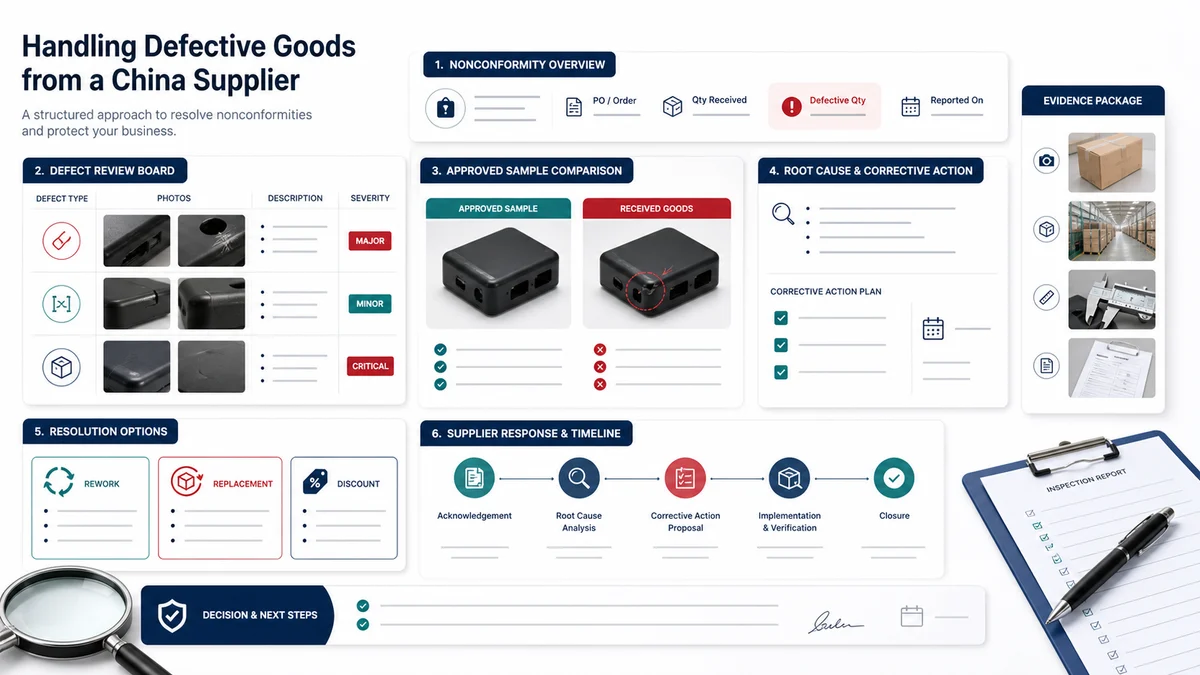
Defective goods should be handled through evidence, classification, and written corrective action. If the buyer reacts only through urgent messages, the supplier may dispute the problem, minimize the severity, or push for shipment before the issue is resolved.
Secure the evidence first
Collect clear photos, videos, inspection reports, measurements, carton numbers, sample comparisons, test results, and shipment documents. Evidence should show what failed, how often it failed, and which standard was used.
If defects are found before shipment, hold balance payment until the issue is understood. If defects are found after delivery, preserve packaging, labels, cartons, and receiving records. Do not destroy goods before documenting them.
Compare against the approved standard
A defect is easier to enforce when it is tied to a written requirement. Compare the goods against the approved sample, product specification, purchase order, packaging file, inspection checklist, and any contract terms.
If the requirement was vague, the negotiation becomes harder. That is why a clear product specification and sample approval process matter before production.
Classify the defect severity
Not every defect deserves the same response. Classify defects by business impact.
Practical severity levels
- Critical: safety risk, legal noncompliance, unusable product, wrong material, or severe functional failure.
- Major: visible quality issue, wrong assembly, wrong finish, wrong packaging, or defect that affects saleability.
- Minor: small cosmetic or workmanship issue that does not affect function or normal sale.
Severity helps prevent emotional arguments. It also helps decide whether to rework, replace, discount, sort, re-inspect, or reject.
Request corrective action
Ask the supplier for a written corrective action plan. It should explain root cause, affected quantity, containment action, rework or replacement method, timeline, re-inspection plan, and who pays for the cost.
A useful corrective action is specific. “We will be careful next time” is not enough. The supplier should explain what changed in material control, operator training, tooling, process setup, QC inspection, or packaging handling.
Decide the commercial remedy
The right remedy depends on defect severity, timing, payment status, and market impact.
Common options include:
- Rework before shipment.
- Replacement production.
- Sorting and re-inspection.
- Discount or credit note.
- Chargeback for repair, repacking, or customer claims.
- Partial shipment hold.
- Order cancellation for severe nonconformity.
If the goods have not shipped, leverage is usually stronger. If the balance has already been paid, the buyer depends more on relationship, contract terms, future order value, and supplier willingness.
Build prevention into the next order
After the immediate issue is handled, update the specification, sample notes, inspection checklist, packaging rules, and payment release conditions. Defects should become controls for the next order.
For repeat production, link supplier payment to quality control stages and final inspection readiness. This reduces the chance that the same problem repeats.