
Communication
How to handle language and cultural barriers with Chinese suppliers
How buyers can reduce misunderstandings with Chinese suppliers using written confirmation, simple English, visuals, bilingual specs, time zone discipline, meeting recaps, and translation checks.
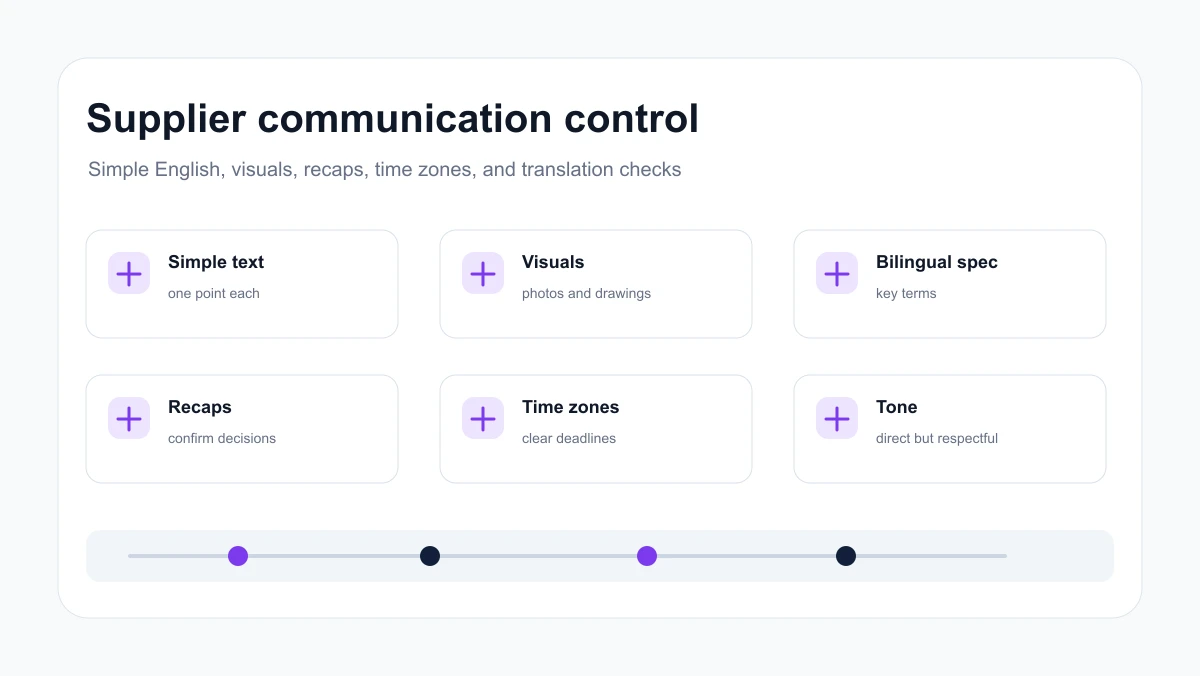
Language and cultural barriers usually become expensive when buyers rely on assumptions. The goal is not perfect language. The goal is clear, repeatable communication that turns decisions into written records.
Use simple written English
Write short sentences. Put one request per line. Avoid idioms, sarcasm, vague praise, or long paragraphs with several decisions inside one message.
Instead of “Please make it nicer,” write what should change: material, color, finish, dimension, packaging, label position, defect tolerance, or test result.
Use visuals whenever possible
Photos, drawings, annotated screenshots, videos, physical samples, color standards, and packaging mockups reduce translation risk. Visual references are especially useful for finish, logo placement, carton marks, assembly details, and defects.
For technical products, connect visuals to the product specification so the supplier can quote and inspect against the same standard.
Confirm every decision
After calls or long chat threads, send a short recap. State what was decided, what remains open, who owns the next action, and the deadline.
Meeting recap checklist
- Approved decisions.
- Open questions.
- Supplier action items.
- Buyer action items.
- Dates and evidence required.
- Current document version.
If the supplier replies “OK,” ask them to confirm the specific version or action when the point is important.
For first contact and RFQs, pair this communication discipline with a professional supplier inquiry structure.
Respect time zones and communication style
Use clear deadlines with dates and time zones. Avoid sending urgent requests without explaining the business reason. Chinese suppliers may avoid direct disagreement, especially if saying “no” creates embarrassment. Ask factual questions that make constraints easier to state.
For example, ask “What is the earliest realistic cargo ready date if packaging artwork is approved on June 12?” instead of “Can you ship earlier?”
Watch translation pitfalls
Machine translation can change technical meaning. Confirm key terms such as material grade, tolerance, coating, certification, tooling, sample approval, defect, rework, and payment release. For important orders, use bilingual key fields or ask the supplier to confirm the Chinese interpretation.