
Communication
How to communicate with Chinese suppliers so they take you seriously
How buyers can get better supplier responses with a clear company intro, structured RFQ, product requirements, realistic quantity, decision timeline, professional follow-up, and decision records.
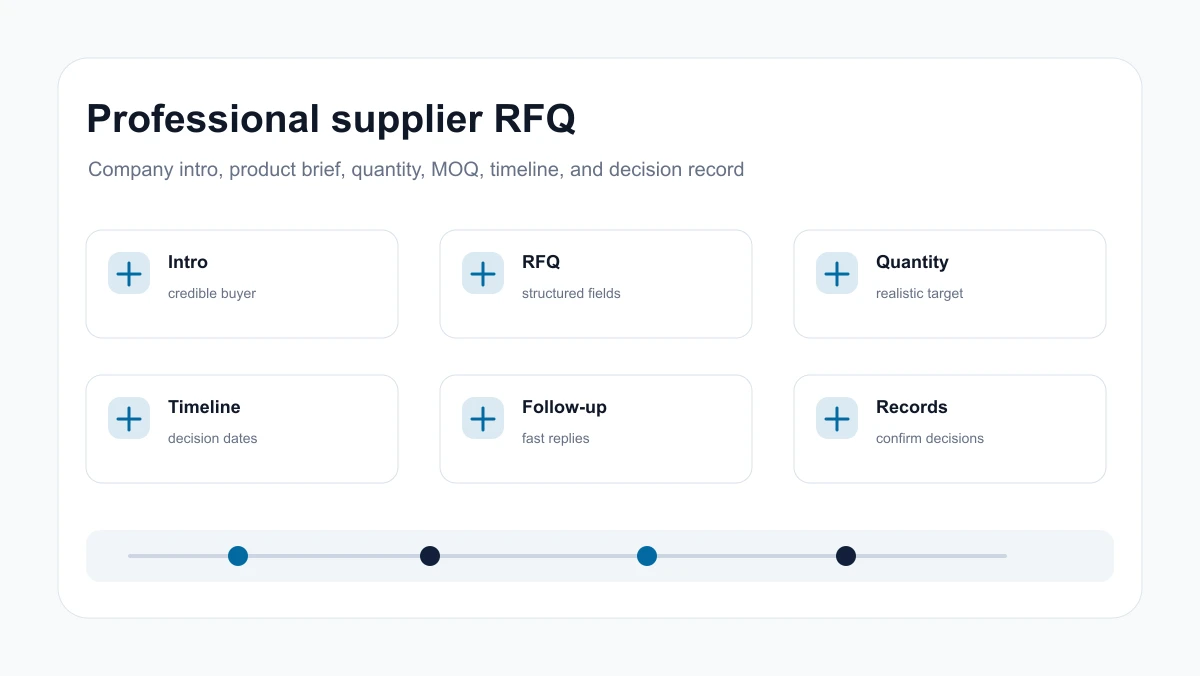
Suppliers take buyers more seriously when the request looks specific, organized, and commercially real. A vague “best price please” message often attracts weak replies or inflated assumptions.
Introduce the buyer clearly
State who you are, what market you sell into, what product you need, whether this is a first order or repeat program, and what decision you are trying to make.
You do not need to reveal sensitive strategy. You do need to show that the inquiry is real and that the supplier has enough information to answer well.
Use a structured RFQ
A strong RFQ includes product description, photos or drawings, materials, dimensions, target market, quantity, packaging, compliance needs, sample request, Incoterm preference, target timeline, and questions for the supplier.
RFQ fields to include
- Product name and use case.
- Specification or reference sample.
- Target quantity and expected repeat volume.
- Packaging and labeling requirements.
- Compliance or testing expectations.
- Sample needs and decision timeline.
- Incoterm or shipment assumption.
- Questions about MOQ, lead time, payment, and production role.
If details are unknown, mark them as open instead of pretending they are final.
Follow up like an organized buyer
Reply quickly when suppliers ask useful questions. Confirm decisions in writing. Keep one current version of the product brief. Avoid changing requirements across chat threads without a recap.
Use language and cultural barrier controls when communication becomes complex.
Avoid credibility killers
Common mistakes include asking for the lowest price before sharing specifications, exaggerating order volume, refusing to answer supplier questions, sending unclear screenshots, changing packaging late, and negotiating aggressively before fit is confirmed.
Professional communication is not about sounding large. It is about making the supplier’s job clear enough that they can respond accurately.