
IP protection
How to avoid your product being copied by competitors
How to reduce product copying risk in China manufacturing with supplier selection, tooling control, staged disclosure, brand controls, monitoring, and realistic expectations.
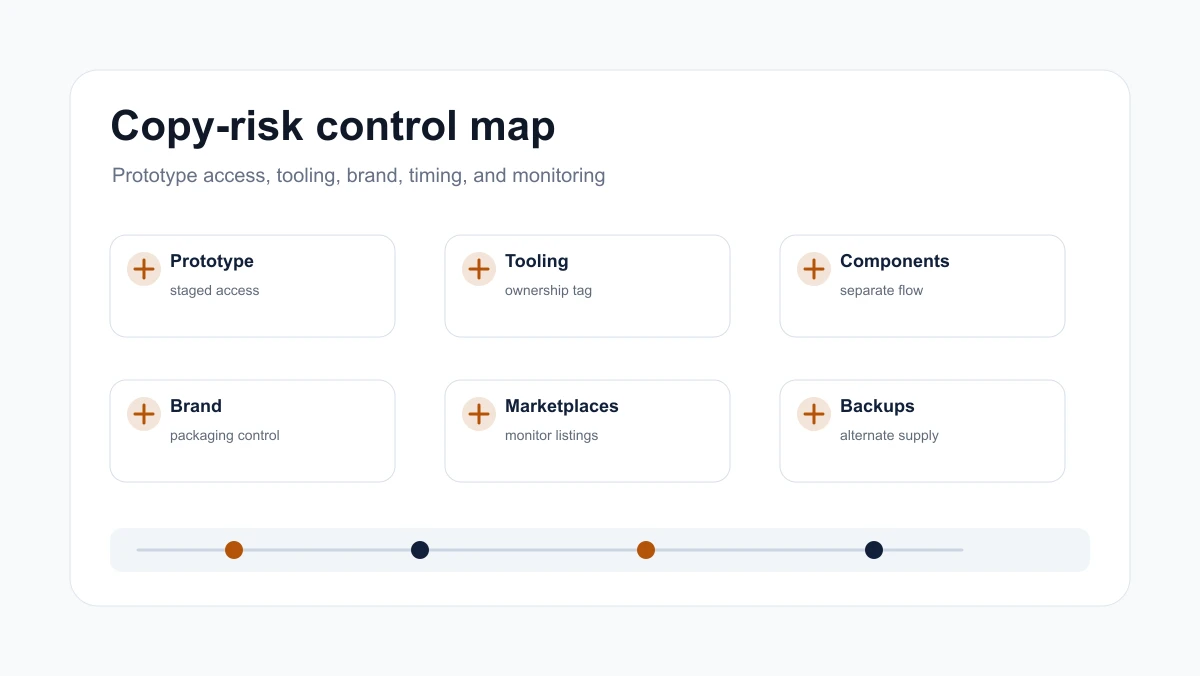
No sourcing process can guarantee that a product will never be copied. The practical goal is to reduce exposure, improve leverage, delay copying, and make it harder for suppliers or competitors to misuse your design, tooling, or brand.
Choose suppliers with copy risk in mind
Supplier selection is an IP control. A supplier that is hard to verify, pushes for full files early, refuses written controls, or sells similar private-label products may be a poor fit for a high-value design.
Screen suppliers for business identity, product focus, export experience, communication quality, factory role, subcontracting risk, and whether they already sell products too close to yours.
Use staged disclosure
Do not send complete technical files, brand artwork, packaging files, and launch plans to every supplier in the first RFQ. Start with enough information to judge capability and price range. Share deeper files only after verification, confidentiality controls, and supplier shortlisting.
For complex products, consider splitting components or processes across suppliers if it is operationally realistic. This adds management work, but it can reduce single-supplier visibility into the full product.
Control tooling and packaging
Tooling is often where copying risk becomes practical. Write who owns molds, fixtures, dies, print plates, and special jigs. Label tooling, keep purchase records, define storage rules, and state whether tooling can be used for other buyers.
Packaging and brand materials also matter. Control label quantities, carton marks, logo files, printed inserts, and rejected branded materials. Unused branded packaging should not remain uncontrolled after production.
Time the release carefully
Copy risk rises once product photos, marketplace listings, retail packaging, and supplier catalogs are public. If launch timing matters, avoid early disclosure of final imagery and packaging. Coordinate supplier production, inspection, shipment, and marketplace launch so the product is not visible long before inventory is ready.
Monitor and respond
After launch, monitor marketplaces, image search, supplier pages, and competitor listings. If copies appear, save dated evidence: URLs, screenshots, supplier names, product photos, packaging, and order records.
Use the prevention controls in design, brand, and IP protection and make sure the supplier contract supports the response.
Realistic limitations
Contracts, NNN agreements, tooling control, and supplier checks reduce risk, but they do not remove it. Products with low technical barriers, visible construction, high margins, or strong marketplace demand are easier to copy. Build commercial defenses too: better brand, faster iteration, quality control, supplier redundancy, and customer trust.