
Supplier verification
How to verify a China supplier is real, not a middleman or scammer
Practical checks to confirm supplier identity, factory capability, payment details, and scam risk before paying or placing a China sourcing order.
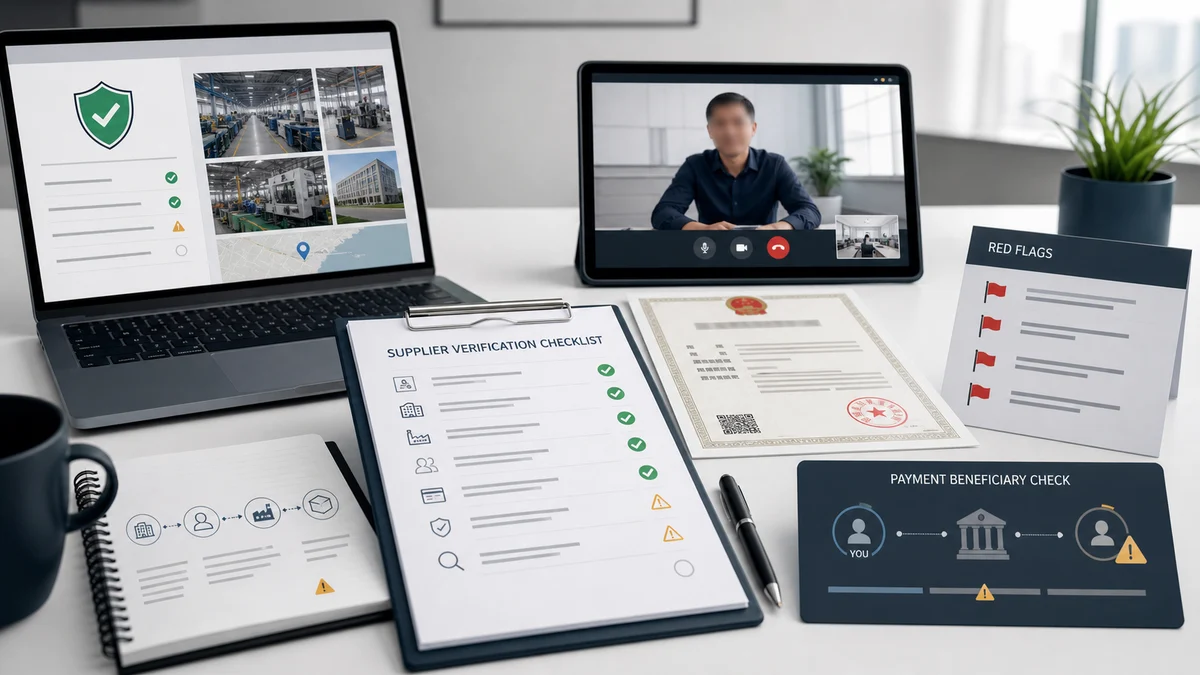
A real supplier is not automatically the right supplier. A trading company is not automatically a problem. The risk comes from not knowing who you are dealing with, who controls production, and where your money is going before an order starts.
Supplier verification should answer three questions: does the company exist, can it supply this product, and do the payment details match the verified party?
Start with identity consistency
Collect the supplier’s English company name, Chinese legal name, business license, address, website, export contact, invoice details, and payment beneficiary. These details should tell one coherent story.
Pause if the supplier changes company names, avoids the Chinese legal name, sends documents from unrelated entities, or asks for payment to a personal account. Some legitimate groups use affiliated companies, but the relationship should be explained in writing before money moves.
Identity checks to document
- Chinese legal name and English trade name.
- Business license and registered address.
- Contact person’s email, phone, and messaging account.
- Proforma invoice issuer.
- Bank beneficiary and account country.
These checks do not prove quality, but they reduce the chance that you are paying the wrong entity.
Separate factory status from product capability
A supplier may be a factory, trading company, exporter, or sourcing office. The buyer’s job is not only to label the supplier. The buyer needs to know who controls production, who owns the process, and who will be accountable when specifications change.
Ask for product-specific evidence: current production photos, equipment relevant to your item, past shipment examples, material handling, packaging line photos, and quality control steps. Generic showroom photos or catalog screenshots are weak evidence.
For higher-risk orders, compare this evidence with a factory verification or third-party audit. Remote checks are useful, but they should not be treated as a full physical audit.
Use a live call to test the story
A live video call can reveal whether the supplier can show the office, sample room, warehouse, production area, or documents without long delays. Ask simple product-specific questions during the call.
Good prompts include: where is this product made, which process is outsourced, what is the normal lead time, what defects usually happen, what inspection is allowed, and who approves packaging?
If the supplier can only repeat sales claims and cannot explain production steps, treat that as a capability risk even if the company is real.
Check the payment route before deposit
Most serious losses happen when payment is sent before the buyer verifies the order file. The beneficiary should match the verified supplier or a documented affiliate. The proforma invoice should match the quote, product scope, payment terms, delivery terms, and bank details.
Before sending a deposit, connect this article with the supplier verification checklist before deposit and China supplier payment terms. Payment control is part of supplier verification, not a separate finance step.
Red flags that need clarification
Red flags are not automatic proof of fraud. They are reasons to slow down and ask for evidence.
- The supplier pressures for immediate deposit before documents are complete.
- Company name, invoice issuer, and beneficiary do not match.
- Product photos are copied from unrelated websites.
- The supplier refuses video calls or only shows a showroom.
- The quoted price is far below comparable offers without a clear reason.
- The supplier avoids sample corrections or inspection terms.
- Bank details change at the last moment.
If several red flags appear together, do not solve the problem with trust. Solve it with documents, samples, inspection rights, and a clear order file.
What verification cannot prove
Remote verification cannot guarantee that mass production will match the sample. It cannot fully prove factory ownership, worker practices, inventory, process discipline, or compliance status. For regulated products, legal and compliance review may be necessary before import.
The practical goal is smaller: make the supplier’s identity, product capability, payment route, and order readiness visible before you commit money.
Practical verification sequence
Use this sequence before a first order:
- Confirm company identity and beneficiary details.
- Check product-specific manufacturing evidence.
- Request and evaluate samples against a written specification.
- Normalize quotes and payment terms.
- Confirm inspection, packaging, and shipment handover before deposit.
Supplier verification is strongest when it connects company checks to actual production evidence. A supplier can be real and still be the wrong choice. A disciplined verification process helps you see the difference before payment.