
Supplier risk
How to avoid depending on one supplier
How buyers can reduce single-supplier dependency in China sourcing through dual sourcing, critical component mapping, tooling ownership, portable specifications, volume allocation, scorecards, and transition planning.
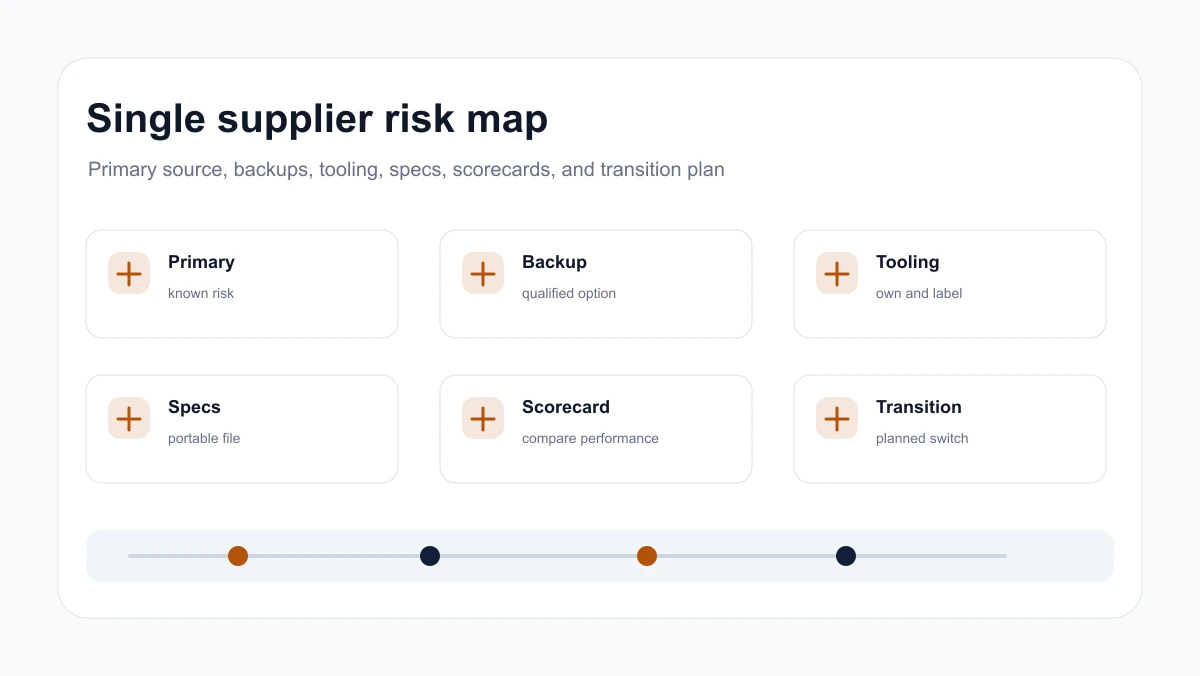
Depending on one supplier can work for a while, but it creates risk when quality drops, prices change, capacity fills, ownership changes, compliance issues appear, or the supplier stops cooperating.
The answer is not always switching suppliers. The answer is making the product, files, tooling, and sourcing process portable enough that the buyer has options.
Map the dependency
Identify which products, components, molds, packaging, labels, certifications, and process knowledge sit with one supplier. Some dependency is visible in purchase orders. Other dependency hides in tooling, undocumented know-how, or supplier-controlled artwork.
Dependency checklist
- Product specification is complete and current.
- Tooling ownership and location are documented.
- Approved sample is available to buyer and supplier.
- Packaging files and label rules are buyer-controlled.
- Critical components and subcontractors are known.
- Alternative suppliers can quote from the same file.
If another supplier cannot quote or sample from your files, the current supplier controls too much.
Use dual sourcing carefully
Dual sourcing can reduce risk, but it can also create quality inconsistency. If two factories make the same product, both need the same specification, sample standard, defect criteria, packaging rules, and inspection plan.
For repeat products, allocate a small share to a secondary supplier before you need them urgently. That keeps the backup warm and reveals quality gaps early.
Control tooling and documents
Tooling ownership should be written in the contract or purchase documents. The buyer should know where molds, fixtures, dies, print plates, and special tools are stored and whether they can be transferred.
The same logic applies to specifications, CAD files, artwork, test reports, carton files, and supplier correspondence. Keep a buyer-side source of truth.
Use supplier scorecards
Track performance across price, lead time, quality, communication, document accuracy, and corrective action. A scorecard helps the buyer know when dependency is becoming dangerous.
If a supplier misses milestones, resists inspection, changes payment details, or refuses documentation, begin backup activation before the relationship becomes a crisis.