
Payment risk
Which payment methods are safest when buying from China
Compare payment methods for China sourcing, including bank transfer, escrow, letters of credit, card payments, and staged milestone payments.
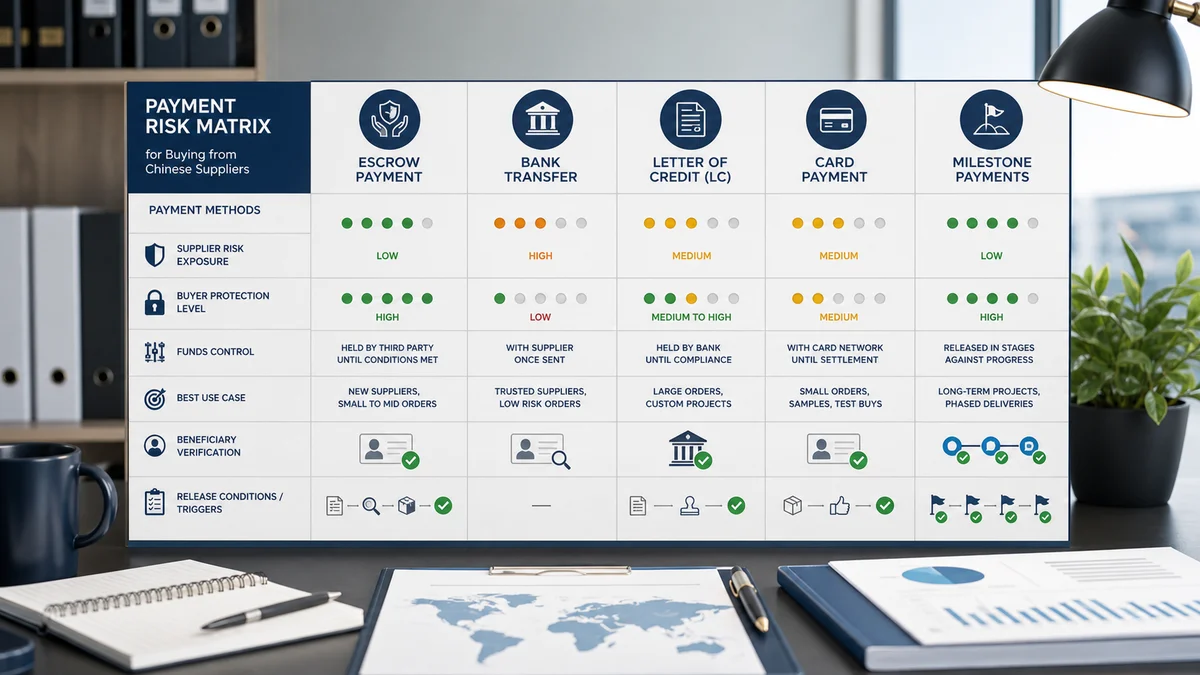
No payment method makes a weak order safe. The safest structure depends on supplier verification, order value, product risk, inspection rights, and how much leverage the buyer keeps before final release.
Payment method matters, but payment timing matters just as much.
Bank transfer
Bank transfer is common for China supplier payments, especially deposit plus balance before shipment. It is simple and widely accepted, but buyer protection is limited once funds are sent.
Use bank transfer only after confirming the supplier identity, beneficiary details, proforma invoice, product specification, sample status, payment terms, and inspection plan. If the beneficiary does not match the verified company or documented affiliate, pause.
Platform escrow or trade assurance
Escrow-style platform payments can reduce risk for smaller or first orders when the transaction stays inside the platform rules. The buyer should understand what is actually protected, which documents are required, and what deadlines apply.
Do not assume platform payment replaces supplier verification. Product scope, sample approval, inspection evidence, and dispute documentation still matter.
Letter of credit
A letter of credit can be useful for larger orders when both sides can handle the banking process and documents are precise. It may reduce payment risk, but it does not automatically solve quality risk. Banks review documents, not the real condition of every product.
For complex products, inspection and acceptance criteria should still be written into the operational process. Legal, banking, and trade finance advice may be needed.
Card or PayPal-style payments
Card or wallet-style payments may help for samples, small orders, or test buys, but suppliers may add fees or refuse them for production orders. Buyer protection also depends on platform rules, evidence, timing, and transaction type.
These methods are not a substitute for clear specifications. If the product requirement is vague, a payment dispute may be hard to prove.
Staged milestone payments
Milestone payments can work for tooling, custom products, or long production cycles. The key is to connect each payment to a verifiable event: approved sample, tooling completion, material purchase, production start, during-production inspection, final inspection, or shipment release.
Milestones should be written before the first payment. Avoid vague triggers such as “when ready” or “when supplier requests.”
Safer payment controls
- Verify the payment beneficiary before sending funds.
- Tie deposit to a complete order file.
- Tie balance payment to inspection or release criteria.
- Keep sample approval and specification records.
- Slow down if bank details change.
These controls also apply to the broader China supplier payment terms process.
Which method is safest?
For many first orders, a practical structure is a modest deposit after verification, production tied to an approved sample and written specification, inspection before balance, and balance payment only when shipment handover details are clear.
For larger orders, regulated goods, custom tooling, or high-value deposits, buyers should involve finance, legal, banking, insurance, and customs professionals as needed. This article is an operational sourcing guide, not financial or legal advice.