
US compliance
How to meet US product standards and requirements when sourcing from China
How US buyers can plan product compliance before sourcing from China, including category rules, testing labs, certifications, labels, supplier claims, and documentation.
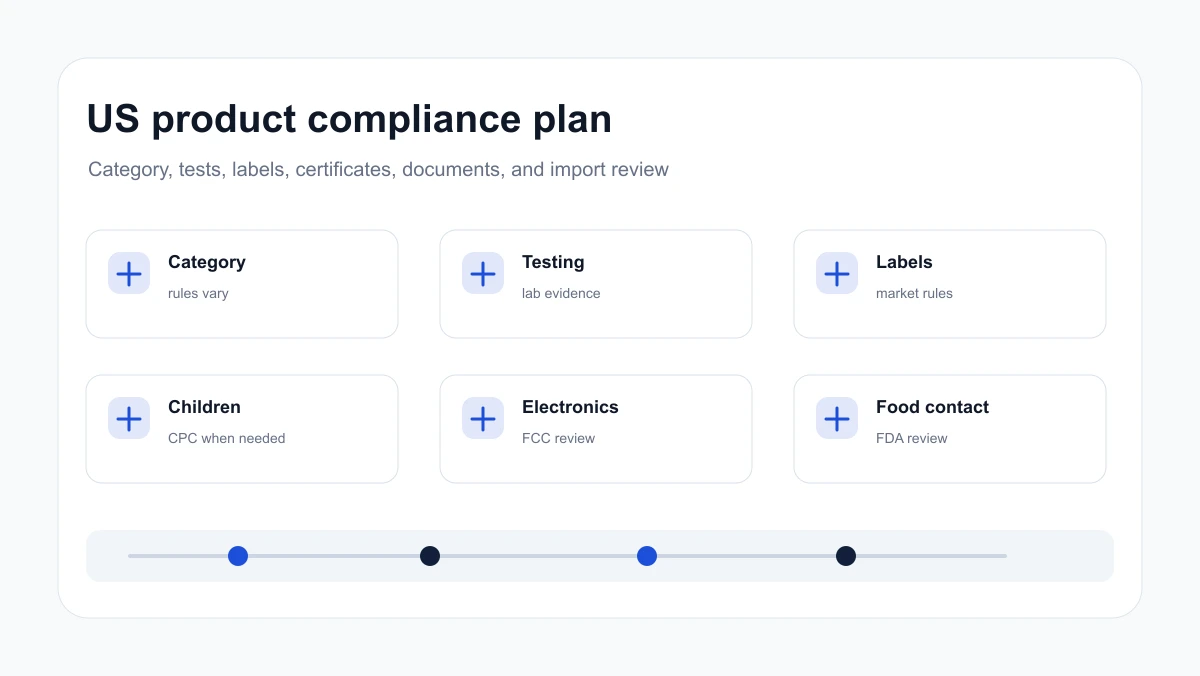
US product requirements depend on the product category, materials, intended users, claims, labels, and distribution channel. Compliance should be reviewed before supplier selection, not after goods are packed.
This article is operational guidance, not legal or compliance advice. Use qualified compliance professionals, test labs, and customs brokers for category-specific decisions.
Identify the product category
Start by defining what the product is, who uses it, and where it will be sold. Children’s products, electronics, food-contact materials, textiles, batteries, chemicals, medical products, cosmetics, and regulated goods can have different requirements.
Do not rely only on supplier claims like “CE approved” or “export quality.” US requirements may differ from requirements in other markets.
Check testing and labeling needs
Some products need lab testing, certificates, tracking labels, warnings, user instructions, or special packaging information. Others may need agency review or specific importer records.
For example, children’s products may involve CPSC requirements and certificates. RF devices may require FCC equipment authorization review. Food-contact materials may require FDA-related review depending on the product.
Useful official starting points include CPSC business guidance, FCC equipment authorization, and FDA food contact substances guidance.
Ask suppliers for evidence
Request test reports, certificates, label photos, material declarations, compliance history, and the exact model or material covered by each document. Check whether the document matches the product, factory, model, date, standard, and destination market.
If the supplier cannot explain the test report, treat it as unverified until reviewed.
Build compliance into the order file
Compliance requirements should be reflected in the product specification, packaging files, inspection checklist, and shipment documents. If a label or certificate is required, it should be checked before shipment release.